
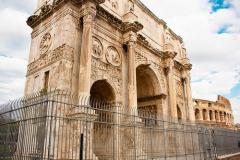
Trajan was ambitious of fame; and as long as mankind shall continue to bestow more liberal applause on their destroyers than on their benefactors, the thirst of military glory will ever be the vice of the most exalted characters. The praises of Alexander, transmitted by a succession of poets and historians, had kindled a dangerous emulation in the mind of Trajan.
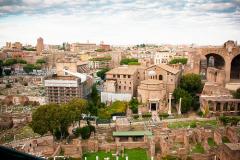
03.08.2012 - 22:43
In the second century of the Christian Aera, the empire of Rome comprehended the fairest part of the earth, and the most civilized portion of mankind. The frontiers of that extensive monarchy were guarded by ancient renown and disciplined valor. The gentle but powerful influence of laws and manners had gradually cemented the union of the provinces.
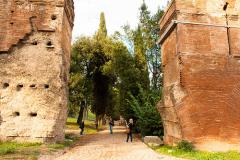
03.08.2012 - 22:37
The principal conquests of the Romans were achieved under the republic; and the emperors, for the most part, were satisfied with preserving those dominions which had been acquired by the policy of the senate, the active emulations of the consuls, and the martial enthusiasm of the people.
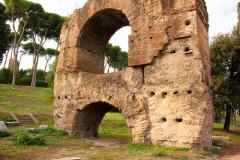
18.07.2012 - 22:47
It was an ancient tradition, that when the Capitol was founded by one of the Roman kings, the god Terminus (who presided over boundaries, and was represented, according to the fashion of that age, by a large stone) alone, among all the inferior deities, refused to yield his place to Jupiter himself.
12.06.2012 - 22:41
'It is the city of Merab that the Arabs say was the residence of Belkis, queen of Saba, who desired to see Solomon. A dam, by which the waters collected in its neighborhood were kept back, having been swept away, the sudden inundation destroyed this city, of which, nevertheless, vestiges remain.